AP Biology AP Test Practice: A Smarter Study Plan
Start AP Biology AP test practice that shows why each miss happened, then plan a focused next session your student can keep.
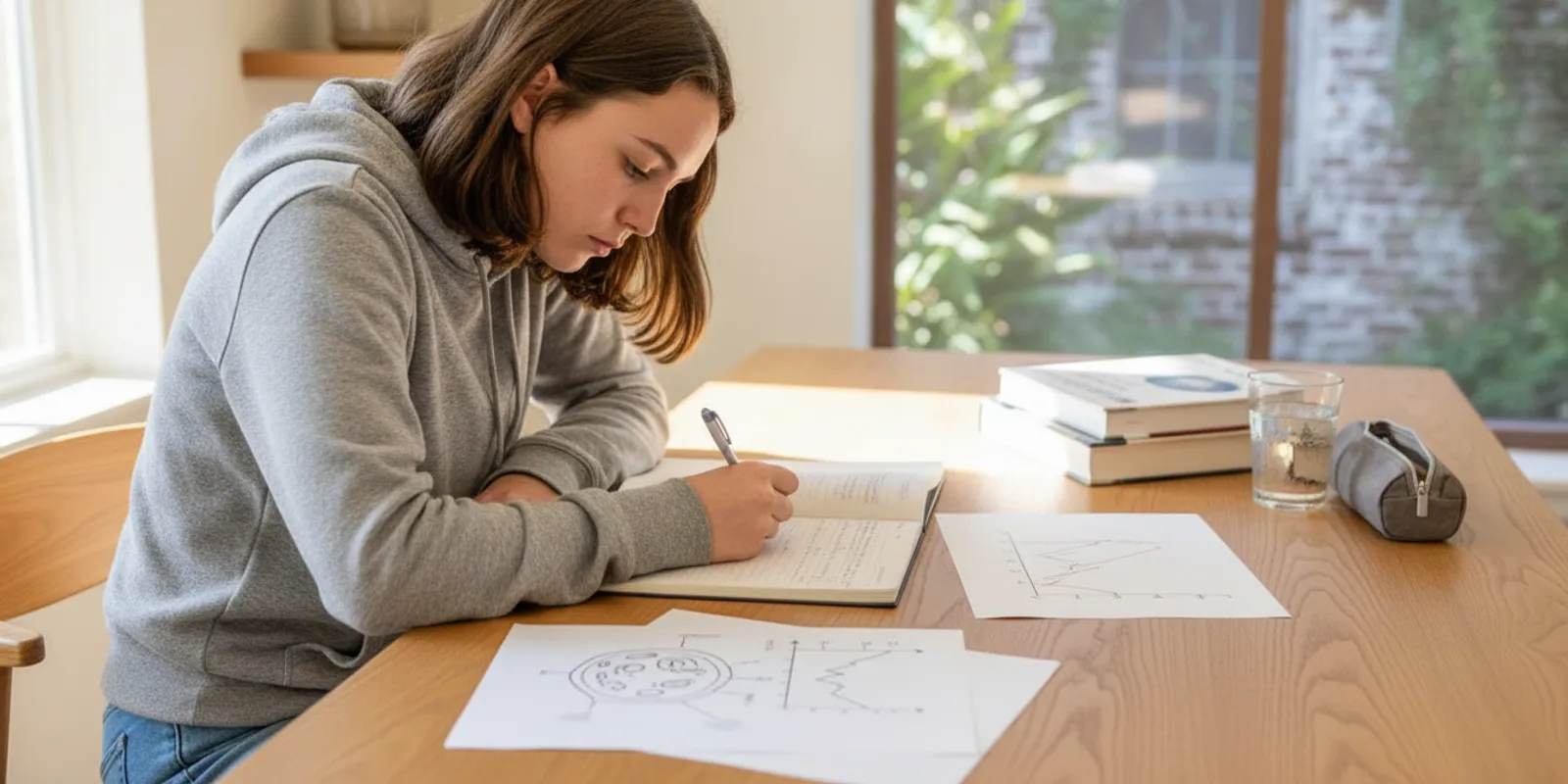
AP Biology AP test practice should do more than produce a score. It should show your student which ideas they can explain, where they lose the thread of a question, and what action will make the next session more useful. A good routine turns every answer, including a guess, into information.
Talk with Northside about biology tutoring
What should AP Biology AP test practice reveal?
Choose practice that reveals how your student thinks, not just what they remember. AP Biology questions can ask students to apply a principle in a new setting, interpret experimental evidence, compare results, or explain a process. A student may know a term and still struggle when the question uses an unfamiliar organism or data display.
Start with a focused purpose. Instead of writing "study biology," choose one goal. Examples include explaining how a change in an enzyme's environment can affect its activity, interpreting a graph that compares two populations, or connecting inheritance to variation among offspring. A narrow goal makes it easier to choose practice and judge whether the work helped.
Connect topics to broad biological ideas. Students may study cells, heredity, gene expression, evolution, and ecology in separate units. Exam questions can still bring those ideas together. A population question, for example, may ask a student to connect inherited variation with environmental pressures. Ask your student to name the relationship before naming the unit.
A balanced session can include a few multiple-choice questions, one short written prompt, and a moment of self-explanation. For every response, ask four questions. What biological idea is being tested? Which detail in the prompt matters? What reasoning connects that detail to the answer? Can the student explain the idea without copying the question's wording?
If a content gap is the main obstacle, Northside's biology tutoring page describes one-on-one support for course work and AP Biology. Families comparing exam formats can also review test preparation tutoring. For the eight-unit map itself, use the AP Biology prep guide instead of rebuilding that plan here. The Course and Exam Description guide explains how the course themes connect to exam reasoning.
How do you review an AP Biology AP test practice miss?
The score is a starting point. A careful review identifies the next useful task. Reserve time for review rather than treating a finished set as the finish line. Include uncertain correct answers too. A lucky choice does not prove that a student can repeat the reasoning under different conditions.
Use a three-pass review. First, complete a focused set without checking answers. Second, mark each response as confident, uncertain, or guessed before scoring. Third, explain the misses and uncertainties in writing. This preserves what the student actually knew at the time. It also keeps the answer explanation from making the question seem obvious afterward.
|
What happened |
What to investigate |
Useful next practice |
|---|---|---|
|
Forgot a term or process |
Recall or understanding |
Rebuild the process from memory, check course materials, then explain it aloud or in writing. |
|
Recognized the topic but chose a weak answer |
Applying a concept to a new context |
Identify prompt evidence for each option and explain why the tempting alternative does not fit. |
|
Misread a graph or table |
Data interpretation |
Name the axes, variables, trend, and comparison before drawing a conclusion. |
|
Answered correctly by guessing |
Fragile or incomplete reasoning |
Write why the answer fits and what evidence rules out a tempting alternative. |
|
Ran short on time |
Pacing or question approach |
Use a short timed set and record which question types take the most time. |
Turn the review into an error log with four columns: topic, mistake type, evidence or reasoning missed, and next action. "Review genetics" is too broad to guide a session. A better note says, "Draw the path from DNA to protein from memory, then explain how a DNA change could affect a protein." That task is specific and checkable.
For a graph or table, use the same sequence each time:
-
Read the title and the labels before looking for a pattern.
-
Identify what changed and what stayed the same.
-
Describe the pattern in plain language before explaining it biologically.
-
If two groups are compared, name each group and state the direction of the difference.
-
Separate what the data show from what the student infers.
A graph may show that a measured response rose as a concentration increased. The student still needs to say whether the design supports a cause or only a relationship. This routine makes errors easier to diagnose. It also reduces the urge to guess from the shape of a graph.
Here is a worked example. A student misses a question about a treatment's effect on cell growth. At first, the student plans to reread the cell-cycle chapter. The review shows they understood the biology but missed that the graph compares treated cells with a control group. The next drill should identify the comparison and describe the trend before interpreting it. If the student cannot explain the treatment's effect, content review should come first instead.
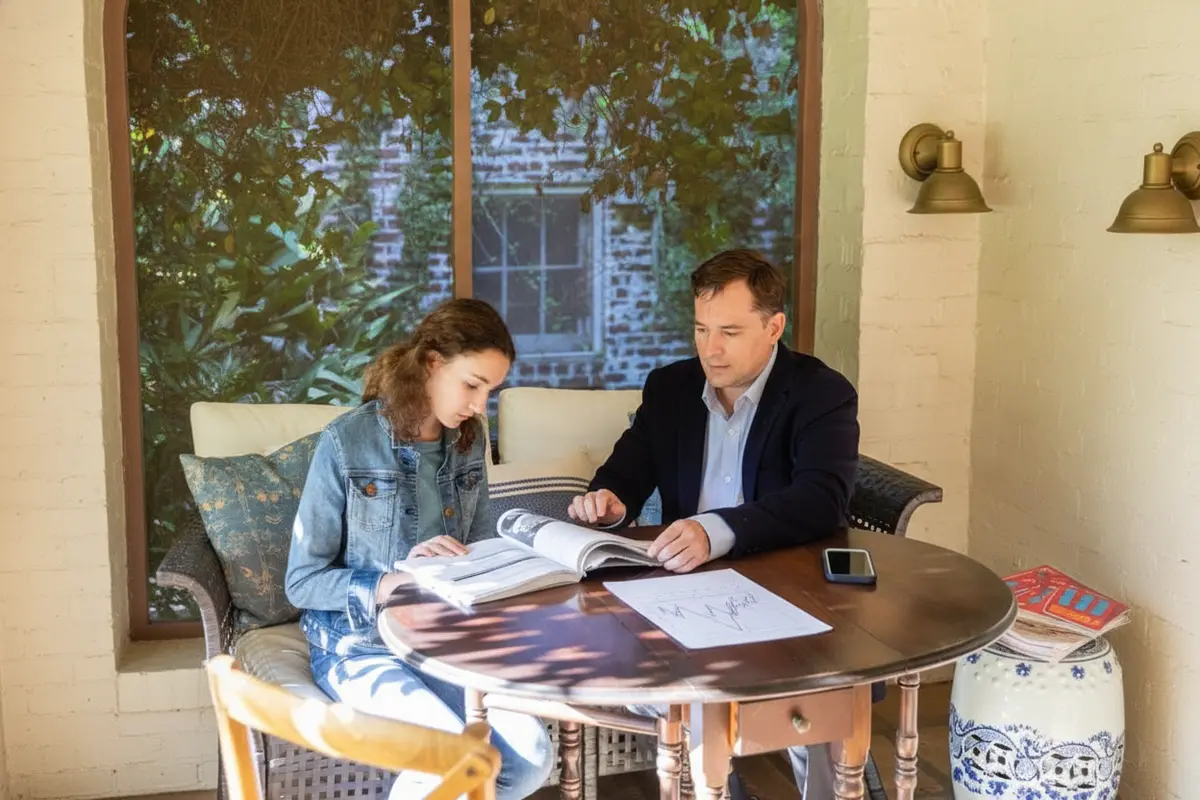
For written practice, compare the student's answer with the scoring guidance for that prompt. Check whether the response answers what was asked, uses accurate biological reasoning, and supports a claim with relevant evidence. Then have the student revise one answer. Reading a strong response can feel productive. Rewriting makes the student practice the missing move.
College Board describes the current exam as a three-hour hybrid digital test. Students answer 60 multiple-choice questions in 90 minutes and 6 free-response questions in 90 minutes, and each section is 50% of the score. The free-response section has two long questions and four short questions. Calculators are permitted. The student page is the AP Biology exam overview, and the format details are on the AP Biology exam page. Confirm the current date and rules with the school, because administration details can change.
When data analysis is the sticking point, related work with charts may help. Northside's statistics tutoring page describes that academic support. The goal is not to turn every biology session into math practice. The goal is to keep a graph-reading obstacle from being mistaken for a biology knowledge gap.
What study routine can your student maintain?
A dependable routine includes recall, application, and feedback, not only rereading notes. Keep sessions short enough to fit a normal school week. Then use the error log to decide where the next one begins.
- Retrieve: Close notes and write what you remember about one process or concept.
- Check: Use class materials to correct gaps and clarify relationships.
- Apply: Answer a small set of questions that uses the idea in a new context.
- Explain: State why the answer follows from the biological principle or evidence.
- Plan: Record one precise action for the next session.
Space study across the weeks available instead of leaving all review for the final stretch. Rotate topics so your student has to decide which concept applies, rather than being told the unit name first. Return to earlier ideas after attention has shifted. That revisit checks whether knowledge is still accessible, not merely familiar from yesterday's notes.
A simple week might include three sessions. One focuses on content and retrieval. One focuses on a graph, a table, or a short written prompt. One mixes earlier errors. During a busy school week, a brief retrieval check can preserve the routine better than planning an unrealistic block of time.
A 30-minute session can stay simple. Spend five minutes recalling a concept without notes. Spend ten minutes checking one confusing relationship in class materials. Spend ten minutes answering a few questions that use it. Spend five minutes recording the error and choosing the next drill. If the student still cannot explain the concept, use the remaining time to clarify it. If the explanation is solid but the question was missed, focus the next set on applying that idea. The clock is a guide, not a quota.
Adjust the balance to match the evidence. A student who has not learned core ideas should begin with clear explanations and recall before dense mixed sets. A student who knows the content but misses application questions should spend more time on unfamiliar scenarios, experimental setups, data displays, and written explanations. A student who understands the material but works slowly can use short timed sets and practice moving on when a question becomes a time sink.
Build in a stop-and-check after each set. Ask the student to name one idea they can now explain, one uncertainty that remains, and one question they want to retry. If the same error appears several times, change the practice instead of only adding more of it. A different diagram, a verbal explanation, or a fresh example may expose the confusion more clearly.
Families balancing several exams can look at Northside's SAT tutoring, ACT tutoring, and SSAT tutoring pages while planning the wider calendar. The SAT preparation guide offers ideas for organizing exam study. A biology routine should fit alongside other commitments. It should not assume every evening belongs to one subject. Broader study habits are covered in the test-taking strategies guide, which this article does not repeat.
How should you compare AP Biology tutoring options?
Look for support that identifies the student's sticking point and changes course when an explanation does not work. The useful measure is whether your child becomes more able to approach a new question independently. No score is guaranteed, and admission decisions are made solely by schools and colleges.
Ask how a tutor tells a knowledge gap apart from trouble applying a concept, reading data, explaining a conclusion, or managing time. Ask what a typical session includes, how the student practices between meetings, and how the tutor checks whether a new explanation helped. A clear answer describes a responsive process. It does not promise a particular exam result.
You can make the conversation concrete. Bring one recent quiz, one practice question that felt difficult, and the student's current unit. Ask the tutor to think aloud about what the work reveals. Does the student overlook a key comparison? Use evidence without explaining it? Recall a process but struggle to apply it? A useful discussion should end with a next step the student can try.
Northside describes personalized one-on-one tutoring and academic coaching that can include AI-driven tools, the Adaptive Learning Engine (ALE), Emotional Intelligence Integration, and Closed-Loop Learning. In plain terms, that approach can use technology to support practice, pay attention to confidence, and check whether an explanation helped before moving on. Generative AI can support learning activities, but the student still needs to understand and explain biology independently. The guide to AI-supported academic coaching discusses how those tools can fit into learning support.
Families can read about Northside's approach, compare online tutoring, and review current information on the pricing page. For local availability, see Northside's tutoring locations. Students outside the Atlanta area can ask about online support. The AP Biology tutor guide covers how to evaluate a tutor, so this section stays on the practice evidence you should bring to that conversation.
A few more questions can help you assess fit. How will the student know what to work on after a session? Will the tutor use the student's own course materials and practice responses? How will you revisit an idea that remains unclear? What should your student be able to do independently after practicing together? These questions focus the comparison on teaching and learning. Northside's guide to questions to ask when evaluating a tutor offers a broader checklist families can adapt.
Pay attention to how the tutor responds when the student is uncertain. A productive explanation should make the next step clearer and invite the student to try again. It should not leave them copying a finished solution. Ask the student afterward what they can now do without help. Their answer can show whether the session built understanding or only got through the assigned questions.
Family experiences and the test preparation guide offer more context. You can also read about online tutoring options if your student needs support beyond Atlanta. Choose materials that address the student's actual need. For an initial conversation, describe the goal and share one example of difficult work. That is more useful than saying only that biology is hard.
How can you use credible biology information while studying?
Practice materials should help a student learn accurate biology and reason from the evidence in a question. When a student wants to explore a real research topic, choose a source that names the organization behind the information and explains its subject clearly. The National Institutes of Health shares information about biomedical research and health. Its official site is a starting point for exploring research topics. Use outside reading to build context, then return to the course prompt and answer what it actually asks.
For example, a student reading about cells might note a question that researchers investigate, the evidence described, and what conclusion that evidence can support. They should also distinguish an observation from an explanation. This habit can sharpen scientific thinking. Outside reading does not replace course-aligned practice or the directions and scoring guidance for an assigned question.
When evaluating a practice resource, check three things. Does it explain answers rather than only listing them? Does it distinguish evidence from interpretation? Does it give enough context to understand the task? If an explanation seems inconsistent with class materials, note the disagreement and ask the teacher or tutor to help resolve it. A polished page is not proof that every claim is correct.
Request a conversation about biology support
Frequently asked questions about AP Biology practice
How many AP Biology practice questions should a student complete?
There is no single useful number for every student. Complete enough questions to notice a pattern, then review the reasoning behind each response. A smaller set analyzed carefully can guide the next step better than a large set finished without review.
Should students focus on multiple-choice or free-response practice?
Include each format. Multiple-choice questions can reveal knowledge and application gaps. Written responses give practice with explanation, evidence, and scientific reasoning. Let the error log show which format needs more attention in a particular session.
When should AP Biology practice begin?
Build regular retrieval and application practice into the course rather than waiting for a last-minute review. As the exam approaches, add mixed and timed sets while continuing to revisit earlier mistakes.
Can tutoring help if a student understands notes but misses practice questions?
That pattern may point to applying ideas, interpreting evidence, or explaining reasoning rather than simple recall. Reviewing the student's work question by question can show which step breaks down and help shape targeted practice.
Choose a next step your student can sustain
Start with one topic, review the reasoning behind each response, and let what you learn shape the next session. If individualized guidance would help your student build a more focused plan, Northside can discuss the available biology support.
Talk with Northside about a next step
With a realistic routine and specific feedback, practice can help your child approach the next biology question with more clarity.
Ready to begin?
Start tutoring with Northside.