
College Majors: Compare Options Before You Apply
Get a practical college majors guide for comparing interests, curriculum, career fit, cost, flexibility, and application goals before you apply.

Choosing among college majors can feel like choosing your entire future, especially when every option seems connected to identity, career plans, and family expectations. A stronger decision starts with evidence. Compare your interests, strengths, curriculum, career questions, cost, flexibility, and application goals before treating any major as a permanent commitment.
Explore Northside's college admissions and academic planning support.
College majors are best compared by fit, not prestige alone. Review the work you enjoy, the skills you can develop, the curriculum you would complete, the opportunities available at each college, and the practical cost of staying flexible.
Northside Tutoring helps students and families turn broad academic interests into clearer questions and a more organized application plan. Use the framework below to compare options without pretending that one choice will determine every future decision.
How Should You Start Comparing College Majors?
A college major is a structured field of study, not a promise that you will perform one job forever. It shapes the courses you take, the skills you practice, and the academic communities you enter. That makes the right starting question less about prestige and more about fit: What kind of problems do you want to spend sustained time understanding?
Begin with a short list of two to four possible fields. Include options that feel exciting, options that match demonstrated strengths, and at least one option you are still investigating. Then compare each field using the same criteria:
- Interest: Do you want to keep learning about this subject after the assignment ends?
- Strength: Which related skills have you built through classes, projects, work, or activities?
- Curriculum: What required courses, labs, writing, quantitative work, or clinical experiences will the program demand?
- Opportunity: What internships, research, practicums, studios, or student organizations make the field tangible?
- Flexibility: Can you add a minor, combine disciplines, change direction, or transfer credits without creating an avoidable delay?
- Cost: What will the program and the college require in tuition, materials, transportation, time, and lost work hours?
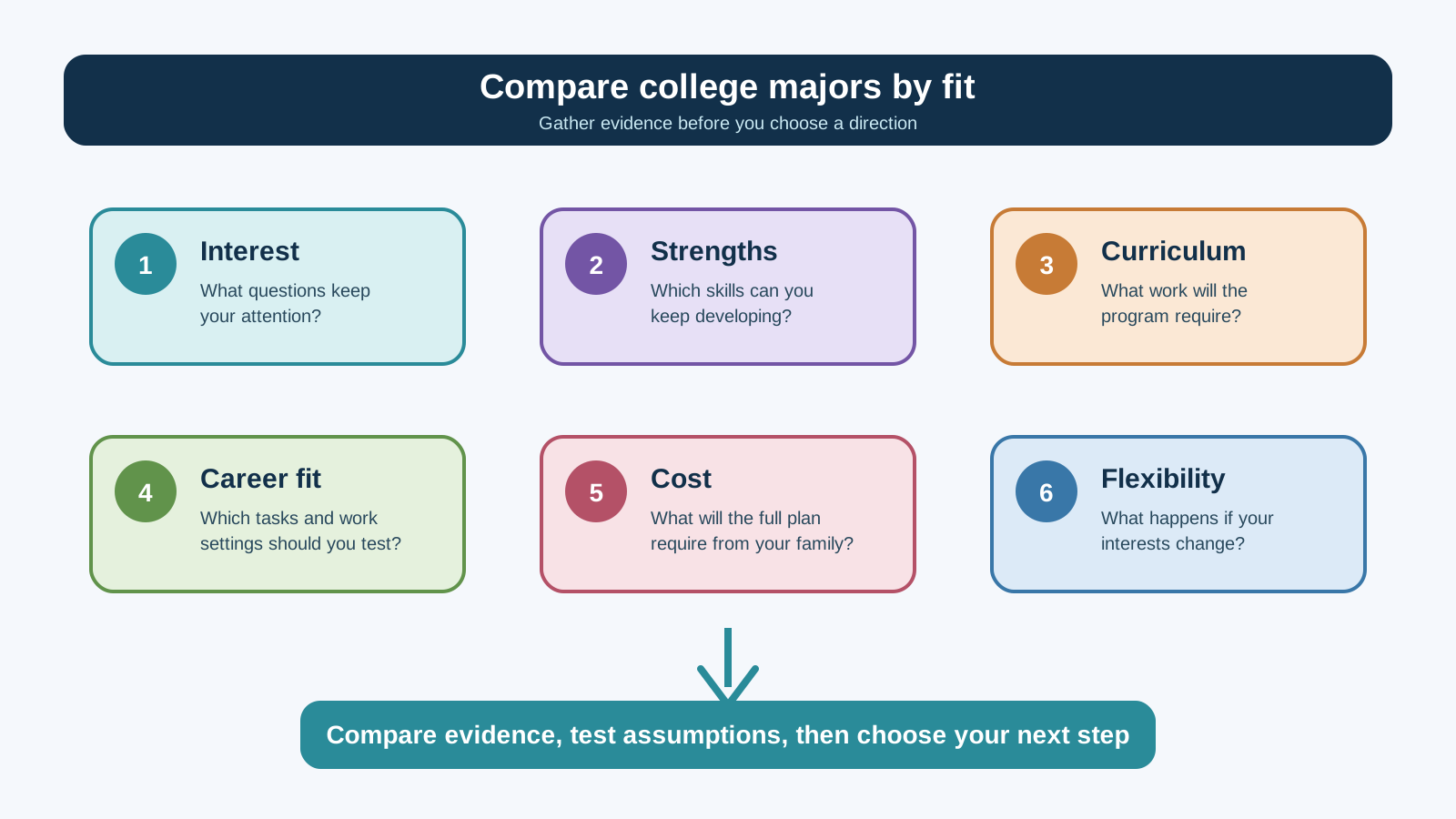
Use a simple comparison sheet. Give each criterion a note, not an artificial score. A column that says "needs more evidence" is valuable because it shows where you are guessing. College Board's career exploration resources can help you connect interests and skills to possible fields. But treat any tool as a prompt for research rather than a final verdict.
That process also creates a stronger conversation with a counselor, parent, or academic coach. Northside's college admissions and academic planning support can help a student move from broad interests to a more organized research plan. The goal is not to force certainty. It is to replace vague pressure with better questions and verifiable information.
What Interests and Strengths Actually Matter?
Interest matters when it is specific enough to guide action. "I like science" is a starting point, not a major decision. Ask what part of science holds your attention: investigating living systems, modeling physical behavior, designing experiments, explaining evidence, or applying knowledge to people and communities. The more precise the interest, the easier it becomes to test.
Strength is broader than a high grade. It can include persistence with difficult material, careful observation, clear writing, quantitative reasoning, collaboration, design, public speaking, or learning from feedback. A student who earns strong grades but dislikes the daily work may be a poor fit. A student who struggles at first but enjoys the process may have a promising foundation.
Turn self-knowledge into evidence
- Review assignments you chose to improve rather than merely complete.
- List projects, clubs, jobs, volunteer roles, and hobbies that held your attention.
- Ask teachers or mentors what skills they see repeatedly in your work.
- Try a low-risk experiment, such as an introductory course or related activity.
- Record what energized you, what frustrated you, and what you would practice again.
Be careful with one-time personality tests. They may offer language for reflection, but they cannot inspect required coursework, financial constraints, or the actual work behind a career. Use them to generate questions, then test those questions against experience. Also separate family expectations from student evidence. Parents may know about finances and opportunity, but the student must be able to sustain the coursework.
When comparing college majors, look for the overlap between curiosity, capability, and commitment. You do not need to love every class. You do need a credible reason to keep engaging when a required course is unfamiliar or difficult. A thoughtful academic plan includes both ambition and practical support.
How Do You Compare the Curriculum Behind Each Major?
Program names can sound similar while creating very different college experiences. Before you compare a major, open the current catalog or department page and inspect the requirements. Do not rely only on a one-paragraph description or a list of possible careers.
| What to compare | Questions to ask | Why it matters |
|---|---|---|
| Required foundation | Which introductory courses are mandatory, and in what order? | Prerequisite chains can affect pace and scheduling. |
| Core workload | How much reading, writing, math, lab, studio, or group work is typical? | The daily work should match the student's learning habits. |
| Choice within the major | How many electives or concentrations are available? | Options let students shape a field around evolving interests. |
| Applied experience | Are internships, research, clinical practice, fieldwork, or portfolios built into the program? | Applied work helps students test classroom ideas in context. |
| Declaration and progression | Is admission to the major guaranteed, competitive, or conditional on grades? | Program access can affect planning and risk. |
| Switching and combining | Can students add a minor, double major, or change direction without delaying graduation? | Flexibility matters when interests develop after enrollment. |
Compare at least two institutions for each leading option. A major at one college may emphasize theory, while another emphasizes practice or interdisciplinary study. Look for course availability, faculty interests, advising, class size, and the timing of required courses. Ask what happens if a required class fills or if you want to study abroad.
For a concrete example, a school profile such as Emory's academic and campus options is only a starting point. You still need to verify the department's current catalog, admissions rules, and cost information directly with the institution. Your comparison should reflect the program you could actually enter, not an idealized label.
A curriculum audit turns an appealing major into a realistic academic plan. It also reveals which high school preparation may matter, such as advanced math, laboratory science, writing, language study, or portfolio development. If a gap appears, identify support and a timeline early rather than treating it as evidence that the major is impossible.
How Can Career Exploration Improve a Major Decision?
Career exploration should expand a student's understanding, not pressure the student to predict a single job at age seventeen. One major can lead to many roles, and many careers draw on skills from more than one field. Start by asking what people in a possible career actually do, which environments they work in, and what preparation is required.
Research the work, not just the title
- Read several descriptions of the work and note recurring tasks.
- Identify the skills used each day, such as analysis, communication, design, coding, investigation, or care.
- Ask a professional, professor, or internship supervisor what entry-level work is really like.
- Check whether the field requires a graduate degree, license, portfolio, certification, or experience beyond the major.
- Compare multiple pathways instead of treating one job title as the only outcome.
Use neutral tools to support this research. College Board's career exploration resources can help students generate fields to investigate. The U.S. Department of Education's College Scorecard can support college and program research. The National Center for Education Statistics provides IPEDS and College Navigator resources for comparing institutions and published program information.
These tools do not decide which college majors are right for you. They also should not be used to turn a changing labor market into a guarantee about future income or employment. Treat salary and employment information as context, check the date and definition behind any figure, and consider the student's interests, abilities, debt tolerance, and desired work environment.
Career exploration is especially useful when two majors appear equally interesting. One may lead toward work that requires more independent analysis, another toward collaboration and client interaction. Neither is automatically better. The useful question is which collection of tasks, settings, and preparation requirements the student is willing to explore seriously.
Keep a record of unanswered questions. A major comparison is stronger when it shows what you have verified and what you still need to ask. That habit will help with college conversations, interviews, and the eventual application process.
What Should You Know About Cost and Flexibility?
Cost is not a final filter to apply after choosing a major. It belongs in the comparison from the beginning because program structure, location, materials, transportation, time to graduation, and required experiences can change the total investment. Ask each college for current tuition, fees, housing, aid, and program-specific costs rather than relying on a national average.
Build a practical cost picture that includes:
- Published tuition and mandatory fees.
- Housing, food, transportation, books, equipment, and technology.
- Travel or unpaid time required for internships, clinical placements, fieldwork, or studio work.
- Likely time to complete the program, including prerequisite sequencing.
- Scholarships, grants, work-study, family resources, and borrowing assumptions.
- The financial effect of changing majors, transferring, or adding a term.
Then investigate flexibility. Some programs make it easier to add a minor or explore another department. Others have tightly sequenced courses, limited seats, or early application requirements for entry into the major. Check the catalog, speak with an advisor, and ask specifically how a change would affect credits, graduation timing, housing, and financial aid.
Flexibility does not mean avoiding commitment. It means understanding the cost of uncertainty before you enroll. A student who has two genuine interests might compare a college with strong interdisciplinary options against a college where each path is highly specialized. A student who needs to work might prioritize scheduling, online options, commute time, and predictable course availability.
Families can also separate the cost of college from the cost of outside academic support. If a student needs help with challenging coursework or application preparation, review current tutoring and test-prep pricing directly and decide whether that support belongs in the plan. The goal is not to add services automatically. It is to allocate resources where they address a specific academic or planning need.
A major is a better decision when it remains workable under real constraints. Compare the ideal program with the program you can realistically attend, afford, and complete. That is not lowering ambition. It is protecting the student's ability to pursue it.
How Do College Majors Fit Into Your Application Story?
Your intended major can give your application direction, but it should not become a performance. Admissions readers do not need a manufactured life plan. They need to see how your academic interests developed, what you chose to explore, and why the colleges on your list make sense for the next stage.
Start with alignment across evidence:
- Course selection that reflects appropriate challenge and curiosity.
- Activities or projects where the student applied related skills.
- Essays that show specific moments, questions, or growth rather than generic claims.
- A college list that reflects academic fit, affordability, environment, and realistic program options.
- Recommendations that can describe how the student thinks and contributes.
Alignment does not require every activity to match one major. A student interested in engineering may also have meaningful commitments in music, athletics, family care, or community work. Those experiences can reveal persistence, collaboration, creativity, or responsibility. The task is to explain the student's actual development, not to retrofit every activity into a theme.
Keep the distinction between an intended major and a fixed identity. Students can enter college curious about one field and discover another through an introductory course, professor, internship, or conversation. An honest application can communicate a thoughtful direction while acknowledging room to learn.
Northside's college application essay strategy can help a student communicate that direction with specific evidence and a natural voice. The strongest essay does not announce that a major is the best choice. It shows why the student is asking a meaningful question and what the student has done to pursue it.
Before submitting an application, revisit the comparison sheet. Can you explain why each college belongs on the list? Can you name the program features you investigated? Can you describe what you hope to learn without overstating certainty? If the answer is yes, your major research is doing its job: it is making your next decision clearer, not pretending to make every future decision for you.
Request college admissions and academic planning support before you finalize your list.
Frequently Asked Questions About College Majors
What is the best college major?
There is no universally best college major. The strongest choice fits the student's interests, abilities, learning environment, financial plan, and possible career direction. Compare the actual curriculum and opportunities at each college instead of relying on a general ranking.
How do I know which major is right for me?
Look for patterns in the work you choose, the subjects that hold your attention, the problems you enjoy solving, and feedback from teachers or mentors. Test those patterns against courses, projects, activities, and conversations with people in the field.
Can I change my college major?
Many students change direction, but the academic and financial effects vary. Review declaration requirements, prerequisite sequences, transfer rules, graduation timelines, and financial-aid policies with each college before enrolling.
Should my intended major determine where I apply?
It should inform your research, but it does not have to determine your entire college list. Compare program structure, campus fit, affordability, flexibility, and support if your interests evolve.
How can a parent help with the major decision?
Parents can ask curious questions, organize research, and encourage low-risk ways to test an interest. The student's evidence and goals should remain central.
Make Your Major Comparison More Deliberate
You do not have to choose from a list of popular majors or a single career prediction. Compare the subjects you enjoy and the work you can sustain. Review each college's opportunities, total cost, and flexibility if your direction changes.
Northside Tutoring helps students and families connect academic interests with practical college planning and a clear application strategy. The goal is a structured next step, not a forced answer about the rest of a student's life.
Ready to begin?
Start tutoring with Northside.